
Understanding Jewellery Allergies and Skin Irritation
Learn the difference between allergic and irritant reactions to jewellery, common triggers, typical symptoms, practical prevention steps and when to seek medical advice.


Itchy earlobes, a red mark under a ring or a rash where a necklace sits: these are common experiences with jewellery. Not every reaction is an allergy, and understanding the difference helps you respond sensibly. This guide explains the main types of reactions, likely triggers and practical steps.
Medical disclaimer: This article is general information, not medical advice, and no jewellery can be guaranteed suitable for every wearer. If you have a persistent, severe or spreading reaction, consult a pharmacist, doctor or dermatologist.
Two main types of reaction
Irritant contact dermatitis
The NHS explains that irritants, substances that damage the skin's outer layer, are the most common cause of contact dermatitis. With jewellery, irritation can come from:
- Moisture and sweat trapped under rings, bracelets and watch straps
- Soap, sanitiser and lotion residue trapped under jewellery
- Friction and pressure from tight or heavy pieces
- Cosmetics, perfume and hair products
Allergic contact dermatitis
This is an immune reaction to a specific substance. Metals, especially nickel, are common jewellery-related allergens. Mayo Clinic notes that nickel allergy reactions usually begin within a day or two of contact. Once someone is sensitised, reactions can recur with future exposure.
Common symptoms
- Itching
- Redness or rash
- Dry, scaly or cracked patches
- Swelling
- In some cases, blisters
Symptoms usually appear where jewellery touches the skin: earlobes, fingers, wrists or neck.
Common triggers
| Trigger | Where it often shows |
|---|---|
| Nickel and some other metals | Earlobes, under rings, neck |
| Trapped moisture and soap | Under rings and bracelets |
| Worn plating exposing base metal | Wherever the piece touches skin |
| Perfume and cosmetics on jewellery | Neck, ears, wrists |
| Pressure from heavy or tight pieces | Earlobes, fingers |
See Nickel and Other Metal Sensitivities.
Practical prevention steps
- Keep jewellery and skin clean and dry. Remove rings before washing hands; dry skin thoroughly before putting them back.
- Apply cosmetics first, then jewellery. See Protecting Jewellery from Perfume and Cosmetics.
- Choose materials thoughtfully, especially for earring posts. Ask sellers what skin-contact parts are made of.
- Limit wearing time for new pieces and watch your skin's response.
- Avoid tight or heavy pieces for long periods.
- Replace worn pieces where plating has worn through.
The American Academy of Dermatology suggests that people with nickel allergy choose jewellery carefully, paying special attention to earrings, earring backs and watches.
If a reaction happens
- Stop wearing the item.
- Gently wash and dry the area.
- Avoid scratching.
- Note which piece and materials were involved.
- Seek advice if symptoms persist, worsen or keep returning.
The NHS advises seeing a GP for persistent, recurrent or severe symptoms; a dermatologist can help identify triggers, sometimes with patch testing.
See When to Stop Wearing an Irritating Item.
Signs of infection (seek medical care)
Warmth, increasing pain, swelling, pus or fever, especially around piercings, may indicate infection and need prompt medical attention.
HANSINI369 Earrings. Jhumkas and festive earrings from HANSINI369, presented on the official Venus Digital Corporation product page. Explore HANSINI369 Earrings
Key takeaway
Jewellery reactions are usually either irritation or allergy. Keep jewellery clean and dry, choose skin-contact materials carefully, introduce new pieces gradually, stop wearing anything that causes a reaction, and seek professional advice when symptoms persist.
Sources and further reading
Written by
HANSINI369 Editorial Team
Our editors research jewellery types, materials, care and craft, and review guides when materials, standards or recommendations change. Read our editorial policy.
Keep reading
Comfort, Safety & Wearability
Nickel and Other Metal Sensitivities: A Practical Guide for Jewellery Lovers
Understand nickel allergy and other metal sensitivities, where nickel appears in jewellery, what EU rules limit, what to ask sellers and practical ways to keep wearing jewellery comfortably.
Comfort, Safety & Wearability
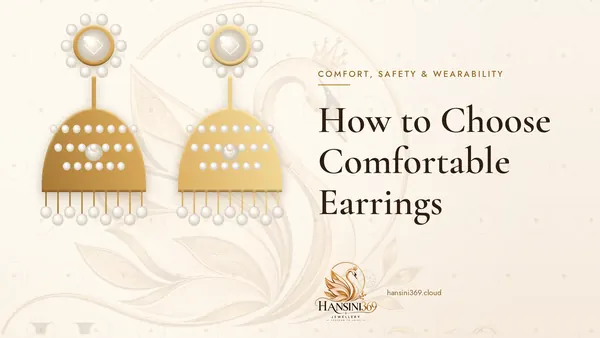
How to Choose Comfortable Earrings
A complete comfort checklist for earrings: weight, balance, backs, posts and hooks, materials, size and how long you will wear them, plus fixes for common discomfort.
Comfort, Safety & Wearability
Lightweight Jewellery for Long Wear: Comfort Without Compromise
How to choose jewellery you can wear comfortably for long days and events: lightweight materials and constructions, styling big looks lightly, and comfort strategies for weddings.