
Safe Jewellery Practices for Children
Important safety guidance for children's jewellery: choking, strangulation and magnet risks, materials and regulations, ear piercing care, age-appropriate choices and safe supervision.


Children love dressing up, and jewellery is often part of festivals, weddings, birthdays and play. But jewellery can pose real risks to young children, including choking, strangulation and exposure to harmful substances. This guide explains the main risks and practical steps for parents, carers and gift-givers.
Important: This guide offers general safety information. Always follow product age labels and manufacturer warnings, and seek medical help immediately if a child swallows jewellery or shows signs of choking or breathing difficulty.
Key risks
Choking
Small parts (beads, charms, stones, earring backs) can be swallowed or inhaled. Young children explore by putting objects in their mouths.
Strangulation
Necklaces, cords, ribbons and long chains can become caught and tighten around a child's neck. Babies and young children should not wear necklaces, including during sleep. Health authorities, including the US Food and Drug Administration, have warned against teething necklaces and similar items for infants because of strangulation and choking risks.
Magnets
Small, powerful magnets (in some magnetic earrings, clasps and toys) can cause serious internal injuries if more than one is swallowed. Keep magnetic jewellery away from children.
Harmful substances
Some inexpensive metal jewellery has, in the past, been found to contain lead or cadmium. Many countries regulate these substances in children's products:
- In the United States, the CPSC requires children's products to undergo third-party testing and be certified with a Children's Product Certificate.
- In Canada, the Children's Jewellery Regulations cover lead and cadmium content; Health Canada publishes a guide.
- In the European Union, REACH Annex XVII restricts substances including lead and nickel release in certain articles.
Buy children's jewellery from reputable sellers who comply with the rules in your country.
Age-appropriate choices
| Age | Guidance |
|---|---|
| Babies and toddlers | Avoid jewellery, especially necklaces, bracelets with small parts and anything worn during sleep |
| Young children | Short, supervised wear of age-appropriate pieces; no small detachable parts |
| Older children | Lightweight, well-made pieces; teach safe habits |
| Teenagers | Similar to adults, with attention to comfort and sensitive skin |
Practical safety habits
- Supervise wear for younger children, especially at busy events.
- Remove jewellery before sleep, naps, bathing, sport and playground time.
- Check pieces regularly for loose beads, stones and backs.
- Store jewellery out of reach of young children.
- Choose breakaway designs for any cord or necklace worn by older children.
- Avoid adult jewellery for young children; it is not designed or tested for them.
- Keep earring backs and small parts away from little hands.
Children and festive dressing
For weddings and festivals, consider:
- Clip-on or lightweight earrings
- Fabric or flower accessories instead of metal necklaces for young children
- Removing jewellery once photos are done
Ear piercing for children
- Have ears pierced by a trained professional using hygienic methods.
- Follow aftercare instructions carefully.
- Choose appropriate initial earrings recommended by the piercer.
- Keep piercings clean and watch for signs of infection (redness, swelling, warmth, discharge).
- Seek medical advice if problems occur.
Piercing is a known risk factor for developing nickel allergy, so material choices for children's earrings deserve care. See Nickel and Other Metal Sensitivities.
Gifting jewellery to children
- Check age labels and suitability.
- Avoid small, detachable parts for young children.
- Choose comfortable, lightweight designs.
- Include safety notes for parents if appropriate.
See Jewellery Gift Selection Guide.
For sellers
If you sell jewellery intended for children, you must meet the safety and testing requirements of each market you sell into. See Jewellery Assembly and Quality Control and seek specialist compliance advice.
Explore HANSINI369 Jewellery. Earrings, necklace sets and bangles for festive, bridal and everyday wear, from the HANSINI369 collection. Find Jewellery for Your Style
Key takeaway
Children's jewellery needs extra care. Avoid necklaces and small parts for young children, supervise wear, remove jewellery for sleep and play, buy from compliant sellers and store pieces out of reach. Safety always comes before style.
Sources and further reading
Written by
HANSINI369 Editorial Team
Our editors research jewellery types, materials, care and craft, and review guides when materials, standards or recommendations change. Read our editorial policy.
Keep reading
Comfort, Safety & Wearability
Understanding Jewellery Allergies and Skin Irritation
Learn the difference between allergic and irritant reactions to jewellery, common triggers, typical symptoms, practical prevention steps and when to seek medical advice.
Comfort, Safety & Wearability
Nickel and Other Metal Sensitivities: A Practical Guide for Jewellery Lovers
Understand nickel allergy and other metal sensitivities, where nickel appears in jewellery, what EU rules limit, what to ask sellers and practical ways to keep wearing jewellery comfortably.
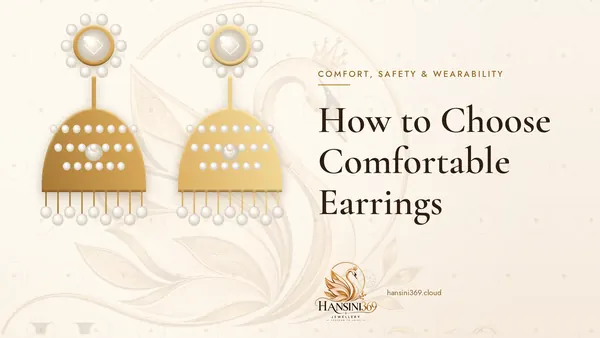
Comfort, Safety & Wearability
How to Choose Comfortable Earrings
A complete comfort checklist for earrings: weight, balance, backs, posts and hooks, materials, size and how long you will wear them, plus fixes for common discomfort.